 Back
BackSynthetic Media Ethics: Maintaining Authenticity in the Age of Avatars
#SyntheticMedia #AIEthics #DigitalHumans #AIAvatars

Jay Anthony
19 March 2026 | 3 min read
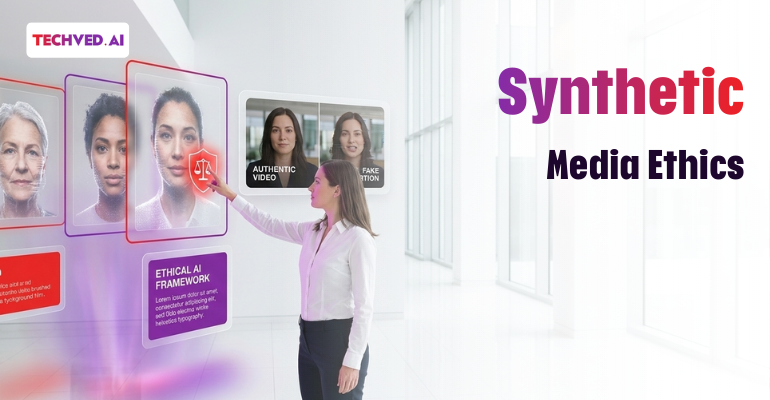
A company launches a polished AI avatar video of their CEO addressing customers. The message is warm, articulate and perfectly localized. Three weeks later, a journalist reports that the CEO never said any of it. The video was synthetic but the trust damage was real.
This scenario is no longer hypothetical. As Agentic AI systems gain the ability to generate, deploy and distribute synthetic media at scale, the question enterprises must answer is not whether they can build AI avatars. It is whether they have the governance to do it responsibly.
Why Synthetic Media Ethics Matters Now
Synthetic media, which includes AI-generated video, voice cloning and digital avatars, is advancing faster than the policy frameworks designed to govern it. For enterprises, the reputational and regulatory exposure is significant and growing.
Synthetic media ethics should be viewed as a governance problem and not a content moderation problem. When an AI system can produce a convincing video of a person saying something they never said, the question of why trust matters more than perfect AI videos becomes the fundamental strategic concern. Audiences who cannot tell the real from the synthetic will eventually trust neither.
Enterprises that deploy synthetic media without a governance framework are not leading with AI. They are leading with liability. This is why Enterprise AI governance and the responsibility layer is imperative and we at TECHVED.AI perfectly understand this.
Building the Governance Layer
Responsible deployment of Agentic AI and synthetic avatars requires a comprehensive AI governance framework. This framework must address the entire lifecycle, from design to retirement.
Key pillars include:
Disclosure Architecture: Every synthetic interaction should be identifiable. Clear labeling at first contact sets expectations. No hidden avatars. No implied humanity where none exists.
Data Protection Integration: Agentic AI data protection means treating every customer interaction as sensitive data. Speech patterns, emotional responses and engagement metrics require the same protection as financial information.
Audit and Accountability: Every decision an avatar makes must be traceable. Every interaction must be logged. When questions arise, answers must exist.
Human Oversight: Critical decisions require human review. Avatars handle routine interactions. Humans handle exceptions, escalations and ethical judgment calls.
Emerging regulatory environments including the DPDP tech platform and broader AI compliance and data protection mandates are codifying exactly these requirements. Enterprises building Agentic AI systems today without these foundations will face mandatory retrofits tomorrow at far greater cost.
AI-Generated Avatars Ethics: Core Commitments
Disclosure by Design- Every synthetic interaction must identify itself. Ambiguity is the enemy of trust.
Consent Architecture- Individuals featured in training data or avatar models must provide informed permission with clear revocation pathways.
Provenance Preservation- Immutable records of creation, modification and distribution enable accountability and dispute resolution.
Human Oversight- Agentic AI operates within boundaries. Humans retain final authority on consequential decisions.
Continuous Audit- Regular assessment of outputs against ethical standards, not merely technical specifications.
These principles anchor responsible AI architecture that sustains rather than exploits stakeholder relationships.
Navigating Regulatory Complexity
AI compliance and data protection requirements are multiplying:
DPDP Tech Platform Considerations
India's Digital Personal Data Protection Act mandates explicit consent, purpose limitation and data principal rights. Agentic AI systems processing personal data for avatar creation or personalization must embed these requirements architecturally.
Global Standards
GDPR, CCPA and emerging frameworks converge on transparency and individual control. Enterprise data privacy services must anticipate jurisdictional complexity.
Sectoral Requirements
Financial services, healthcare and public sector face additional synthetic media restrictions. AI compliance under DPDP and equivalent regimes demands specialized expertise.
Agentic AI Governance Is Not a Constraint. It Is a Competitive Advantage
Organizations that build Agentic AI systems with embedded governance frameworks move with more confidence. Customers who know a brand's AI operates within declared ethical boundaries are more likely to engage, share data and maintain loyalty over time.
The enterprises that will lead in synthetic media are not those with the most sophisticated avatars. They are those with the most credible governance. That is the real differentiator in AI Consulting Services conversations at the board level today.
How TECHVED.AI Approaches Responsible AI Architecture
TECHVED.AI treats AI governance framework design as a foundational component of every Agentic AI deployment. Rather than adding governance as a compliance layer after build, TECHVED.AI embeds AI compliance and data protection standards into the architecture itself, including enterprise data privacy services alignment and audit-ready output systems for synthetic media use cases.
This approach ensures that as AI-generated avatars ethics and regulations evolve, the systems enterprises build today remain compliant, credible and defensible.
Choose the path of trust. Build Responsible AI Systems with TECHVED.AI
FAQs
What is synthetic media ethics?
Synthetic media ethics refers to the principles and governance standards that govern the creation, deployment and disclosure of AI-generated content including deepfakes, voice clones and AI-generated avatars.
How does Agentic AI support AI-generated avatars ethics?
Agentic AI adds autonomous reasoning that checks accuracy, consent and brand alignment before any video goes live.
What is a DPDP tech platform?
It refers to technology infrastructure designed for compliance with India's Digital Personal Data Protection Act, embedding consent management, data minimization and principal rights into Agentic AI systems.
How does agentic AI data protection differ from traditional approaches?
Autonomous systems require dynamic privacy controls that adapt to context, purpose and jurisdiction in real time rather than static policy enforcement.
What makes AI Consulting Services essential for ethics implementation?
Specialized expertise bridges the gap between abstract principles and operational reality. AI governance consulting provides proven frameworks, regulatory intelligence and change management support.
Written By
Jay Anthony
Marketing Manager | TECHVED Consulting India Pvt. Ltd.
Jay Anthony holds expertise across a broad range of tech and innovation sectors. Driven by a passion for exploring ideas and sharing insight, Jay aims to craft work that is thoughtful, engaging and accessible. Whether diving into new subjects or reflecting on familiar ones, the goal is always to connect with readers and offer something meaningful.

Stay up-to-date with
all new market trends and
happenings
 #HumanCentricDesign #UXAI #AgenticAI #DigitalExperience
Empathy Meets Intelligence: The TECHVED.AI Approach to Human-Centric Design
#AgenticAI #InsuranceTech #AITrends2026 #InsuranceInnovation
Why AI Is No Longer Optional for the Insurance Industry in 2026
#AgenticAI #CustomerSupport #AIWhisper #ContactCenterAI
The 24/7 "Silent Partner": How AI 'Whispers' Empower Customer Support Teams
Ready To Transform?
Automate smarter. Create faster. Grow with AI.